
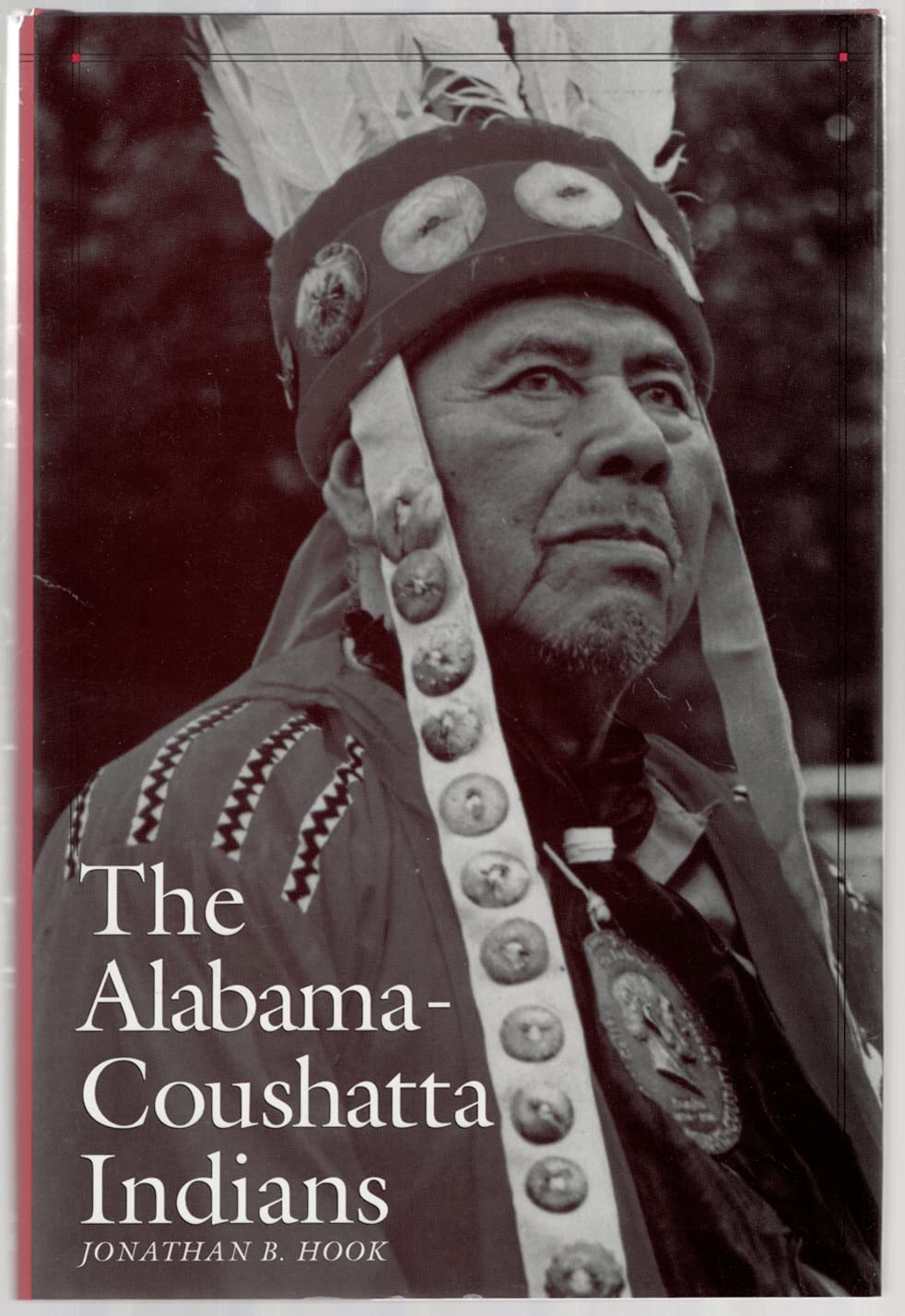
The Alabama-Coushatta Indians (Volume 71) (Centennial Series of the Association of Former Students, Texas A&M University)
Product details
| Management number | 233578390 | Release Date | 2026/06/27 | List Price | $10.44 | Model Number | 233578390 | ||
|---|---|---|---|---|---|---|---|---|---|
| Category | |||||||||
What does it mean to be Indian today? Specifically, what does it mean to be an Alabama-Coushatta Indian living on a reservation in East Texas, geographically far from ancestral territory and removed in time and by the intervention of white missionaries and government agents from the traditions and lifestyles of one's forebears?All of the most emotional issues among contemporary Southeast Texas Native Americans—including repatriation of remains, educational funding, health care, and cultural preservation—in some way address the question of personal identity. Difficulties in determining who and what are "Indian" continually divide the community, and analyzing the Alabama-Coushatta cultural transition is complicated by the dearth of written sources and the repression by 1930 of most overt evidence of the old ways. In this book Jonathan Hook engagingly discovers the earlier cultural tradition and the influences that caused it to evolve to its present form and conceptualizes those changes in a way that explores the very concept of identity.In vivid, efficient prose, Hook describes what is known of the various European intrusions into Creek (Muskhogean) culture and how these changed the tribal life of the Alabamas and Coushattas, eventually leading them to the reservation they now share in Southeast Texas. He draws on written sources where they are available but also on the oral history of tribal members, to whom he had unprecedented access. He describes village organization, leadership succession, the "law of retaliation," the jubilee celebration of the Green Corn Festival (when all crimes except murder were forgiven), the matri-clan social pattern and marriage practices, burial rites, and religious practices including pride in being "a peculiar and beloved people of God."Hook then considers the dual paths of searching for cultural identity today: regenesis, "the reintroduction of cultural practices formerly observed by the group," and ethnogenesis, the creation of a new cultural identity through the deliberate introduction of cultural practices that were not part of a specific tribe's cultural heritage. Thus, he illustrates, on the Alabama-Coushatta reservation the attempt to recover Indian identity has meant the adoption of powwow and other pan-Indian expressions of art, music, attire, and religion. Largely it has meant the adoption of Plains Indians ways, however "foreign" those may be to the tribe's indigenous culture. For example, many Alabama-Coushatta dancers now dance the "grass" dance (of the Plains tribes) rather than the "stomp" dance (their own traditional ceremony). Hook explores this phenomenon nonjudgmentally, elucidating "the inherently mutable nature of ethnicity."The result of Hook's work is a fascinating study of "the dynamic and contextually based nature of personal and communal ethnic identity." Five centuries of cultural transition are traced and assessed, yet still made to seem personal and very human. In his conclusion he symbolizes the analysis he has made as he describes a mixed-blood child dancing in a tribal ceremony. "This young child," he explains, "inherits a five hundred–year legacy of cultural transition instigated by Columbus's arrival in this hemisphere." The means of achieving continued ethnic survival, he concludes, is "learning to 'walk in both worlds.' . . . Both cultural worlds must be studied, understood, and navigated." This book is a beginning Read more
| ISBN10 | 0890967822 |
|---|---|
| ISBN13 | 978-0890967829 |
| Edition | First Edition |
| Language | English |
| Publisher | Texas A&M University Press |
| Dimensions | 6.24 x 0.79 x 9.31 inches |
| Item Weight | 1.1 pounds |
| Print length | 208 pages |
| Publication date | November 1, 1997 |
Bestseller ranking
Native American Studies



Correction of product information
If you notice any omissions or errors in the product information on this page, please use the correction request form below.
Correction Request Form